
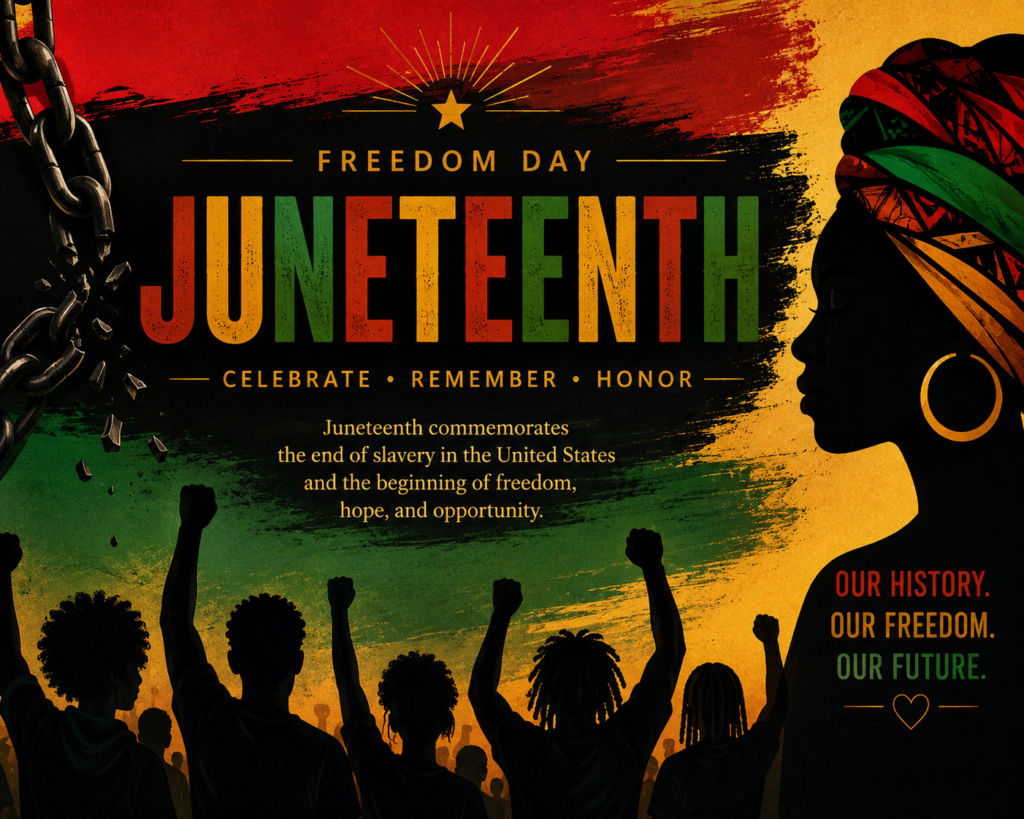
Most people know Juneteenth as the day enslaved people in Texas finally learned they were free — June 19, 1865, two and a half years after the Emancipation Proclamation was signed. And while that moment is real and worth honoring, the full story of Juneteenth is deeper, older, and far more layered than what gets taught in schools or celebrated in corporate press releases.
The Proclamation That Freed No One
When Abraham Lincoln signed the Emancipation Proclamation on January 1, 1863, it was celebrated as a turning point in American history. What is rarely emphasized is that the Proclamation only applied to enslaved people in Confederate states — states that had already seceded and were not under Union control. It did not free enslaved people in border states loyal to the Union. It was a war strategy as much as it was a moral declaration.
Enslavers knew this. Many deliberately withheld the news of emancipation from the people they held in bondage. In Texas, one of the most remote Confederate states with limited Union presence, enslavers continued business as usual for more than two years after the Proclamation was signed. Some historians note that a messenger carrying the news was murdered before reaching Texas. Others point to the deliberate suppression of information as an act of continued control.
Freedom was real. But the people who were supposed to be free were the last to know — and that was not an accident.
June 19, 1865
When Union General Gordon Granger arrived in Galveston, Texas on June 19, 1865, and read General Order No. 3, it was not a celebration for him. It was a military directive. The order declared that all enslaved people were free and that the relationship between former enslavers and the freed was now one of employer and employee.
For the Black people of Texas, however, that day cracked the world open. The celebrations that erupted were raw, holy, and rooted in a spiritual recognition that something long prayed for had finally arrived. People wept, sang, prayed, and moved. Families began searching for one another immediately. The day was called Jubilee.
A Holiday Born from the People
Juneteenth was not created by the government. It was created by Black people who refused to let that moment be forgotten. Freed people in Texas began celebrating annually, pooling resources to purchase land specifically for Juneteenth gatherings. One of the most well known of these is Emancipation Park in Houston, purchased in 1872 by a group of freed Black men so their community would always have a place to gather and remember.
The holiday spread as Black Texans migrated across the country during the Great Migration, carrying the tradition with them. It was kept alive through Black churches, Black families, and Black communities — not through government recognition, not through mainstream media, and certainly not through American history books.
For most of its existence, Juneteenth was either unknown or dismissed by white America. It was only in 2021 that the federal government declared it a national holiday — more than 150 years after that day in Galveston.
What Juneteenth Really Represents
Juneteenth is not simply a celebration of freedom granted. It is a testament to the resilience of people who held onto joy and memory even when the systems around them worked to erase both. It is a reminder that freedom delayed is freedom denied — and that the people most harmed by oppression are often the last to receive relief, even when the law says otherwise.
It is also a reminder that Black people have always created their own traditions, their own sacred spaces, and their own ceremonies of remembrance. Juneteenth did not need government validation to be real. It survived because the community chose to keep it alive.
As we honor this day, let us honor the fullness of what it represents — not just the end of legal slavery, but the ongoing work of true liberation. Liberation of the body, the mind, the spirit, and the culture.
That work is not finished. But Juneteenth reminds us that we have always known how to carry it forward.